Turn advice into actions you understand
“Eat well and be active” says little about a busy Tuesday. Ask the professional supporting you to explain how the advice could work in your circumstances. A useful note might cover these questions:
- Food: Which meals and foods fit my needs?
- Activity: What suits my health and starting point?
- Follow-up: When will we speak again?
- Questions: Who should I contact about symptoms or difficulty eating enough?
Norway's public dietary guidelines are general advice and may need adapting for illness. The activity guidance also says activity should fit your health and abilities. Use these recommendations as a basis for discussion rather than a daily test to pass. Helsenorge: Norwegian dietary guidelines. Helsenorge: Physical activity recommendations for adults and older adults.
Prepare for days when time is short
Look for practical obstacles before adding more goals. If you often arrive home late, you could keep ingredients for a simple meal available. If an agreed activity conflicts with work, discuss an alternative that still fits your individual plan.
Write down one situation: “When I get home late, I will use the simple dinner we have planned.” This is a planning example, not a nutrition or exercise prescription. A backup day should not become a reason to eat too little. Food access, money and working hours are real circumstances to bring to a follow-up conversation. Four-society joint advisory: Nutritional priorities to support GLP-1 therapy for obesity (2025, corrected 2026).
Bring observations to your next conversation
You do not have to turn everyday life into a spreadsheet. Agree what is useful to notice and how you want to record it. That might mean a brief example of a meal that worked, a time when eating was difficult, or an activity that needed adapting.
The advisory recommends that healthcare professionals monitor food intake, hydration and possible nutrition problems. Food notes or photos can be part of this when helpful. An app or a photo cannot establish whether you have a nutrient deficiency. Use observations to raise questions, not to award yourself a score for effort. Four-society joint advisory: Nutritional priorities to support GLP-1 therapy for obesity (2025, corrected 2026).
Separate practical barriers from symptoms
Forgotten shopping and persistent nausea need different responses. Reduced appetite and gastrointestinal symptoms can make it harder to eat and drink enough. The advisory recommends contacting the treating clinician early about side effects and explains that vomiting and diarrhoea can lead to dehydration. Four-society joint advisory: Nutritional priorities to support GLP-1 therapy for obesity (2025, corrected 2026).
Contact a healthcare professional when symptoms prevent adequate food or fluid intake. If you cannot keep fluids down or become clearly unwell, seek prompt medical assessment rather than waiting for a routine coaching conversation. Needing healthcare is not a sign that you should try harder. Four-society joint advisory: Nutritional priorities to support GLP-1 therapy for obesity (2025, corrected 2026).
Know who helps with each part
Your doctor assesses treatment and medical symptoms. A registered dietitian can assess nutritional needs and adapt food advice for illness or inadequate intake. A physiotherapist or suitably qualified trainer may help with activity and physical function. The advisory describes involving different professionals when needed. Four-society joint advisory: Nutritional priorities to support GLP-1 therapy for obesity (2025, corrected 2026).
A coach can support practical nutrition and habit commitments within their competence. Clarify that role before starting. When a week goes differently from the plan, discuss what happened, what support you need and what should change next week. Avoid turning missed meals or exercise sessions into a reason for stricter rules.
Frequently asked questions
Do I have to track everything I eat?
No. Tracking should have a clear purpose and suit you. Agree what information would be useful with the person supporting you. If tracking causes distress or difficult thoughts about food, discuss this with a healthcare professional.
What if I cannot follow the plan?
Describe what got in the way. Practical barriers may need simpler arrangements, while symptoms and inadequate intake need healthcare assessment. The plan may need adjustment rather than more pressure.
Can a coach advise on my medication?
Medical decisions belong with your treating healthcare professional. Coaching about food habits and practical follow-up does not replace a doctor or registered dietitian.
Support for everyday commitments
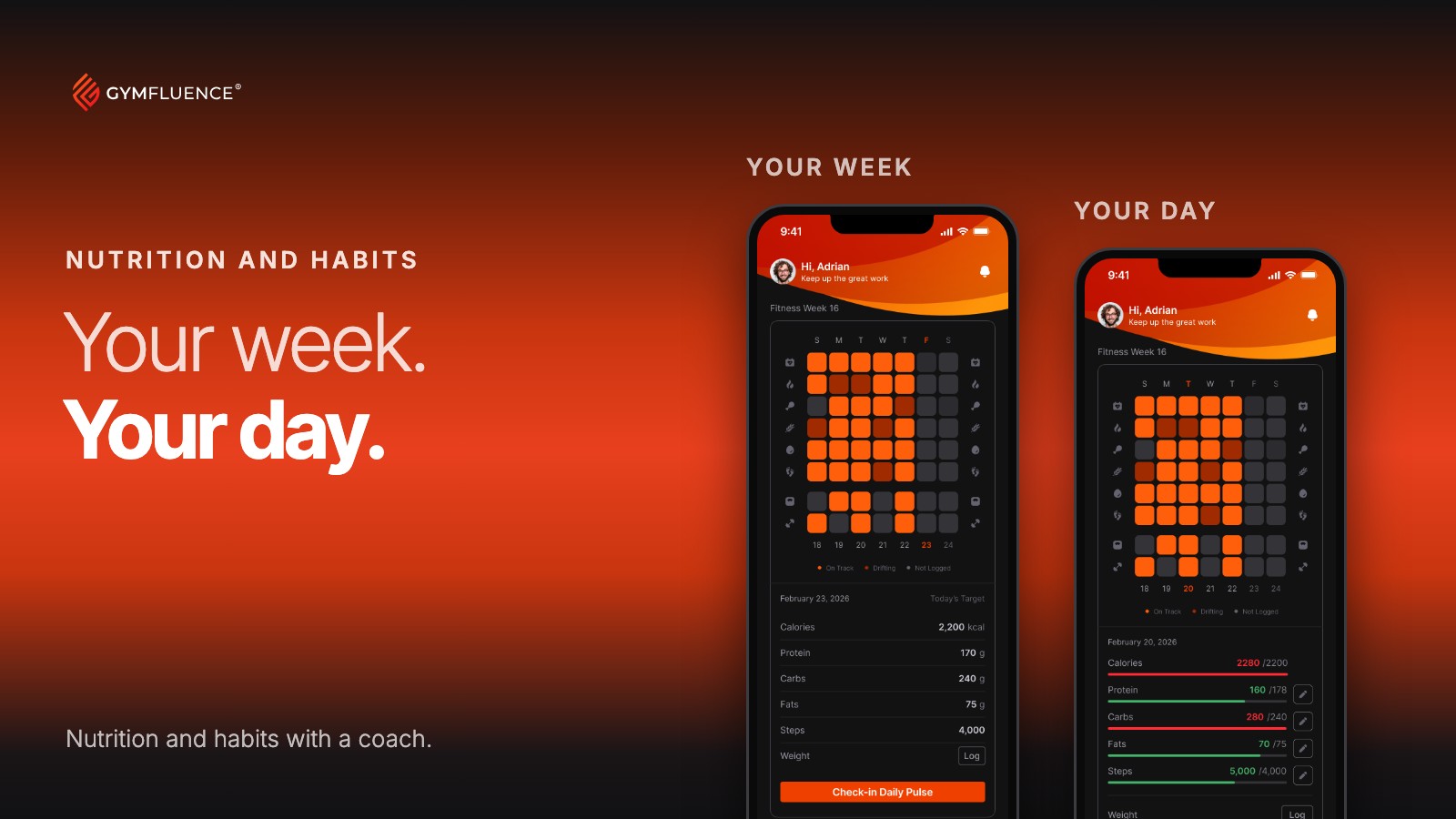
Gymfluence offers nutrition and lifestyle coaching for people who want to lose weight, from a real, independent coach. Your coach can help you follow practical commitments and work through changes in everyday life. Medical treatment and nutritional needs related to illness belong with your healthcare team.
Through Gymfluence Verified, we assess the coach's background, competence and quality of support. This is Gymfluence's own quality status, not a professional or healthcare credential.
See how Gymfluence worksSources
These sources support general information and individualised follow-up. Planning examples are editorial suggestions, not a tested treatment programme. The advisory combines evidence review and expert recommendations; it is not a study of Gymfluence.